Harry Foley, who delivered the Society’s June 2026 seminar, writes about his PhD research on the unbuilt legacy of the 1950–51 Coventry Cathedral competition and what the overlooked submissions reveal about post-war ecclesiastical design in Britain.
According to Alan Powers, information on twentieth-century church architecture in Britain remains inadequate. Architectural historians presiding over the topic have often prioritised the material of church building, statedly omitting hundreds of design proposals on the basis of being unrealised. However, with only forty-one Anglican churches consecrated in Britain between 1945 and 1956, this approach has exacerbated an off-beam view of the denomination as resistant to post-war reform, overlooking their use of publications to become, as Elain Harwood has claimed, the most vocal proponents for liturgical and architectural change of the post-war period. Combined with what Clare Price has identified as an overemphasis on the avant-garde, the centralised plan, and other developments favouring the immediacy of the 1962-65 Second Vatican Council, formative post-war developments in ecclesiastical design in Britain have often been neglected, including important published material generated by the 1950-51 Coventry Cathedral competition.
Fig. 1 - External Perspective of the Porch by Basil Spence (1957). Credit: RIBApix.
It is now 75 years since architectural journals first revealed Basil Spence’s winning design for Coventry Cathedral (Fig. 1), an occasion of international interest, his competition proposal perhaps first alluding to the establishment of a modern church architecture in Britain. The published drawings were at once polarising, arousing public excitement and critical suspicion in equal measure, heralding calls for a wider reflection upon the competition’s losing entries. On 30th August 1951 The Architects’ Journal provided the most robust coverage in this respect, an overview of 15 commended and specially mentioned designs. The remaining 204 submissions, most of which are yet to be published, were almost unanimously ridiculed by critics following their exhibition in the King Henry VIII School hall in Coventry: ‘a parade of sterile, dreary, vulgar or stunt designs’ requiring the ‘faculty of clairvoyance’ to interpret.
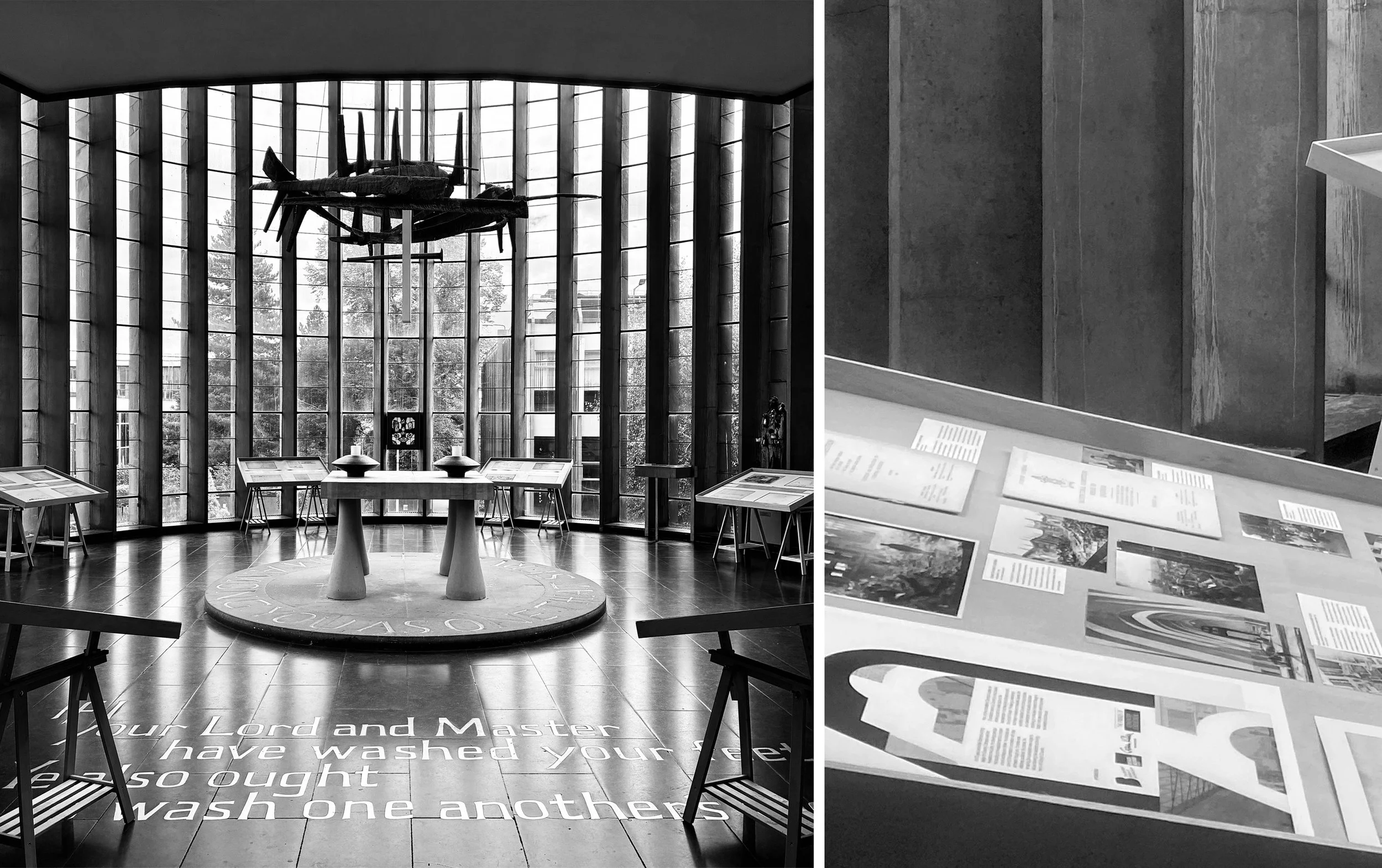
Fig. 2 - 75: Towards a New Cathedral Exhibition in the Chapel of Unity, Coventry Cathedral. Credit: Author.
75: Towards a New Cathedral (Fig. 2) presents early findings from Harry Foley’s PhD research at The Bartlett School of Architecture, UCL, which returns to Coventry’s unsuccessful entries as part of a wider study on the representation of mid-century Anglican design discourse, architectural media and competitions, and the unbuilt in Britain. Applying Hélène Lipstadt’s understanding of both architectural competitions and exhibitions as forms of publication, the 75 exhibition examines a variety of media material generated by the Coventry Cathedral competition. In doing so, the exhibition re-frames a selection of the competition’s losing submissions - including entry No. 119 by Alison and Peter Smithson, No. 148 by Ernest Wamsley Lewis, and No. 214 by Colin St John Wilson and Peter Carter (Fig. 3) - as underexplored yet valuable contributions displaying an overlooked diversity of design thinking in architects’ early attempts to define a post-war ecclesiastical architecture in Britain.
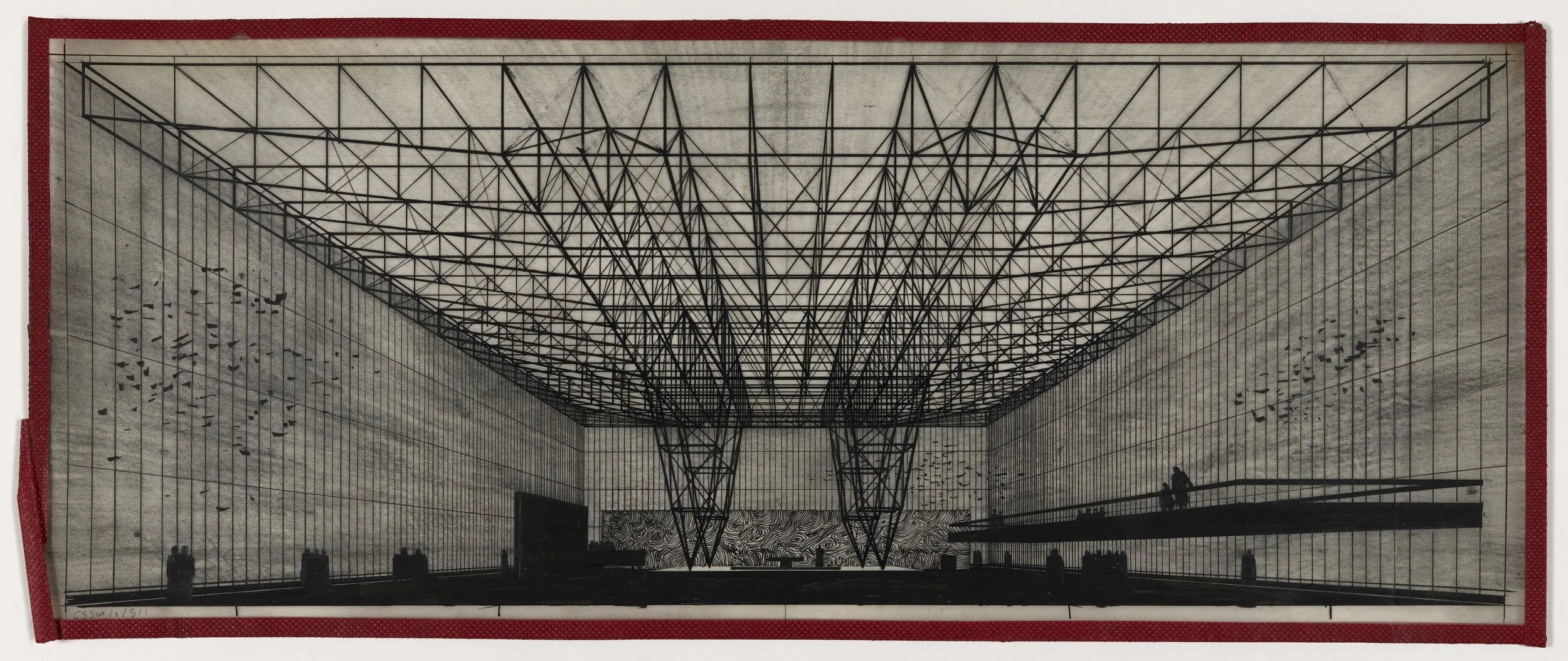
Fig. 3 - Internal Perspective by Colin St John Wilson and Peter Carter (1951). Credit: RIBA Collections.
Author / Curator Bio:
Harry Foley is a Scunthorpe-born Architectural Designer, Educator, and Historian. As a practitioner he has worked in New York, Beijing, and London, most notably with Stirling Prize-winning practice Stanton Williams on the award-winning Royal Opera House ‘Open Up’ scheme. He has taught Architecture and Interior Design for several higher education institutions and is completing a PhD in Architectural and Urban History and Theory at The Bartlett School of Architecture, UCL. His research focuses on working-class representation in architecture, architectural media and competitions, and twentieth-century ecclesiastical interiors in Britain.
75: Towards a New Cathedral is on display at Coventry Cathedral until the end of October 2026. Entry is free.
Recent Updates: