
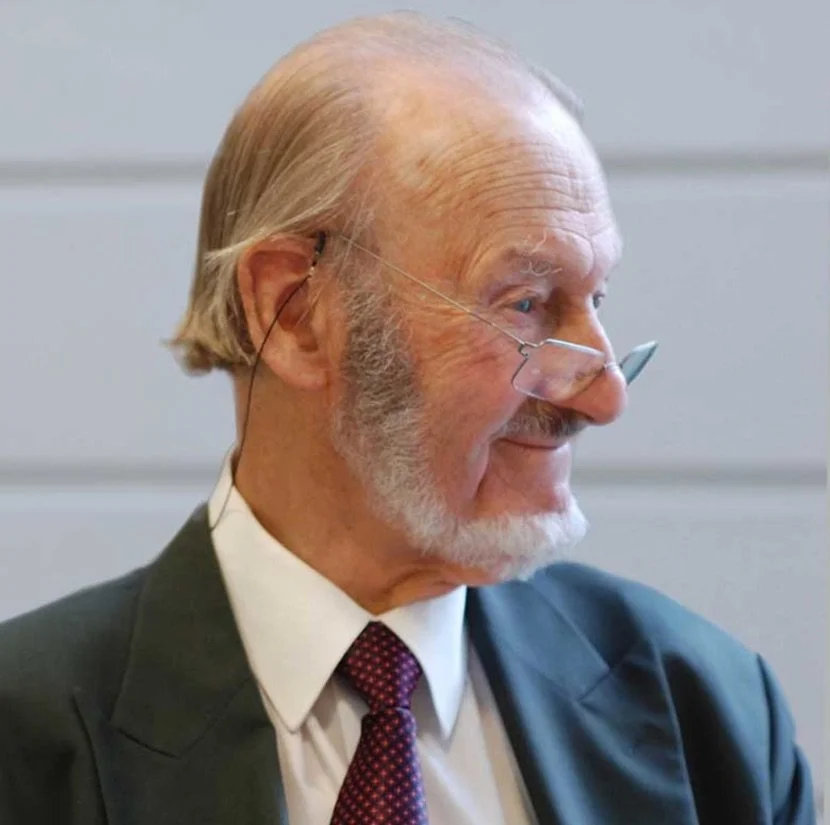
Donald Insall, who died on 10 October at the age of 100, was a pioneer in the post-war field of architectural conservation and a long-time member and supporter of the SAHGB who, in 2021, made him an Honorary Patron Member. Trained as both an architect and a town planner, he was also a Lethaby Scholar with the Society for the Protection of Ancient Buildings (SPAB). In 1957 he established Donald Insall Associates with Peter Locke, another Lethaby Scholar, and in the same year was commissioned by SPAB to write a report on The Care of Old Buildings: this became the basis of his first book, The Care of Old Buildings Today, published in 1972. In 1966, the Government commissioned the firm to write a report on Chester, which was published as Chester: A Study in Conservation in 1968. It was a milestone in urban studies and conservation.
Although probably best known for the restoration of Windsor Castle following the devastating fire of 1992, the firm’s list of conservation and restoration projects was extensive. The first was Wotton House in Buckinghamshire (1957), soon followed in the 1960s by what Insall called ‘our first big job’, the restoration of Robert Adam’s Kedleston Hall in Derbyshire. His philosophy was to regard the building as a ‘living entity’ for which he would prepare a detailed life story, balancing structural preservation with the building’s ongoing use. Kedleston Hall established Donald Insall Associates as one of the country’s foremost conservation practices leading to the restoration of Asgill House in Richmond, Surrey, and Chevening House in Kent in the early 1970s. Insall retired from the practice in 1998 but continued to act as a consultant until his death.