
Remembering the Colonial Soldier: The Indian Undertaking of the Imperial War Graves Commission, 1917–27
In his article published in Architectural History, MS Srinivas discusses the Imperial War Graves Commission’s engagement with the South Asian dead of the First World War.
Article Summary
Of the quarter-million members of the British colonies and dominions who lost their lives to the First World War, nearly 74,000 were from British India, greater than any other colonial force. The fate of these people, in death, was the responsibility of the Imperial War Graves Commission (IWGC). The Commission had a sweeping mandate: to memorialize, in perpetuity, every member of Britain and its empire who had fallen to the war, wherever they had fallen. What followed is possibly one of the largest and most significant building programs of the century, but one that has received little scholarly attention so far.
My article investigates the IWGC’s engagement with the South Asian dead of the war, and the development of commemorative policy and memorial sites for them in the decade after. Taking as its starting point the Raj’s peculiar politics of cultural non-interference, it explains why the Indian charge emerged as a distinct project, and how the IWGC arrived at a commemorative system that was informed by indigenous funerary practices, but only inconsistently so. It also follows, from this system, the development of the Commission’s first two Indian memorials at Port Tewfik, Egypt, and Neuve Chapelle, France, tracing in particular the role of architect Herbert Baker in expanding the latter project and constructing for it a hybrid imperial-national identity. It shows how a process of decision-making spread across the imperial network resulted in the two projects being radically different, and how this difference expanded to an essentially East-West split in the Commission’s body of work.
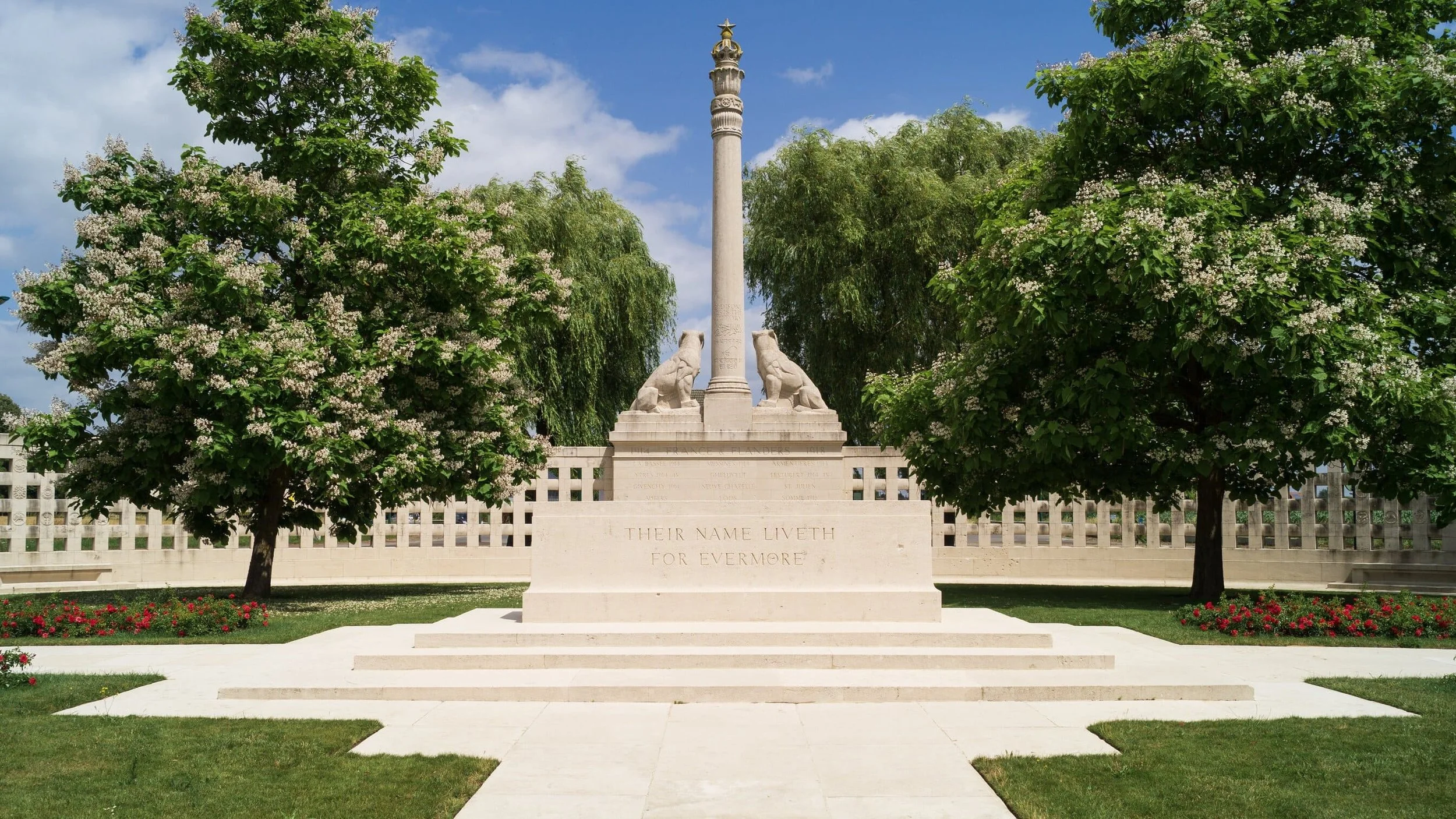
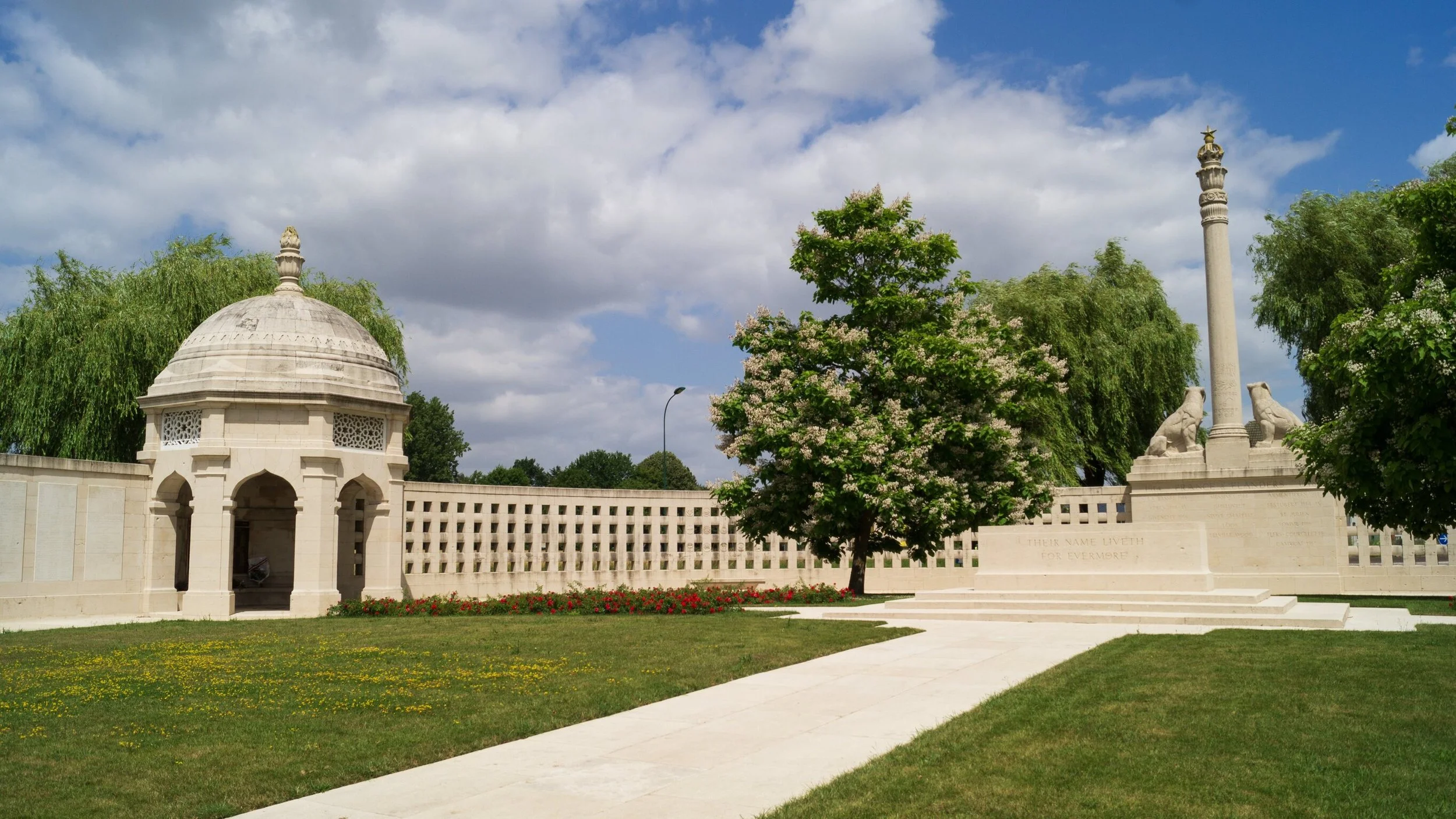
Broader Research
The article connects to my interest in twentieth-century cultures of war commemoration, and the crystallization of the war memorial and as a modern architectural type in the decades after the First World War. It also connects more broadly to my doctoral dissertation, which is focused on a string of political movements in the late nineteenth and early twentieth centuries that sought to reimagine the British Empire in more coherent and organic terms — most notably Alfred Milner’s “Kindergarten” and the Round Table movement. My project examines the cultural and moral dimensions of the principles of imperial and international organization espoused by these movements, and the ways in which these ideas found expression and sustenance through architecture and visual culture in the prewar and interwar years. The Imperial War Graves Commission stands as one of the great pan-imperial projects born out of these movements, but I am also interested in other works such as government buildings, allegorical murals, and propaganda posters that bear their imprint.
Intended Impact
The (now) Commonwealth War Graves Commission has attracted some public attention over the last few years as inequalities in its commemorative work have come to light. Since 2021, in response to mounting scrutiny, the Commission has been working with expert committees to publicly identify and address these issues. In some regards, my article continues work in this direction. It reveals instances of postmortem treatment that we would today regard as unequal or unfair and have not been noted by the research so far. It also reveals, as a piece of historical research, the processes through and circumstances under which such differential treatment arose. For these reasons, I hope it can be a contribution to the public conversation on these topics.
More generally, I hope that the article will serve – like any good piece of architectural history – as a reference for understanding the origins, design, and iconography of the memorials discussed. A critical history was particularly necessary for the Neuve Chapelle Memorial, which is sometimes coopted by popular narratives of the past in both Britain and India, and I hope my article can fill that void.
Author Bio
MS Srinivas is a historian working on his PhD in Architecture, Landscape Architecture, and Urban Planning at Harvard University. He is interested in the relationship between political thought and visual culture in the British Empire, and histories of cemeteries, memorials, and war commemoration.
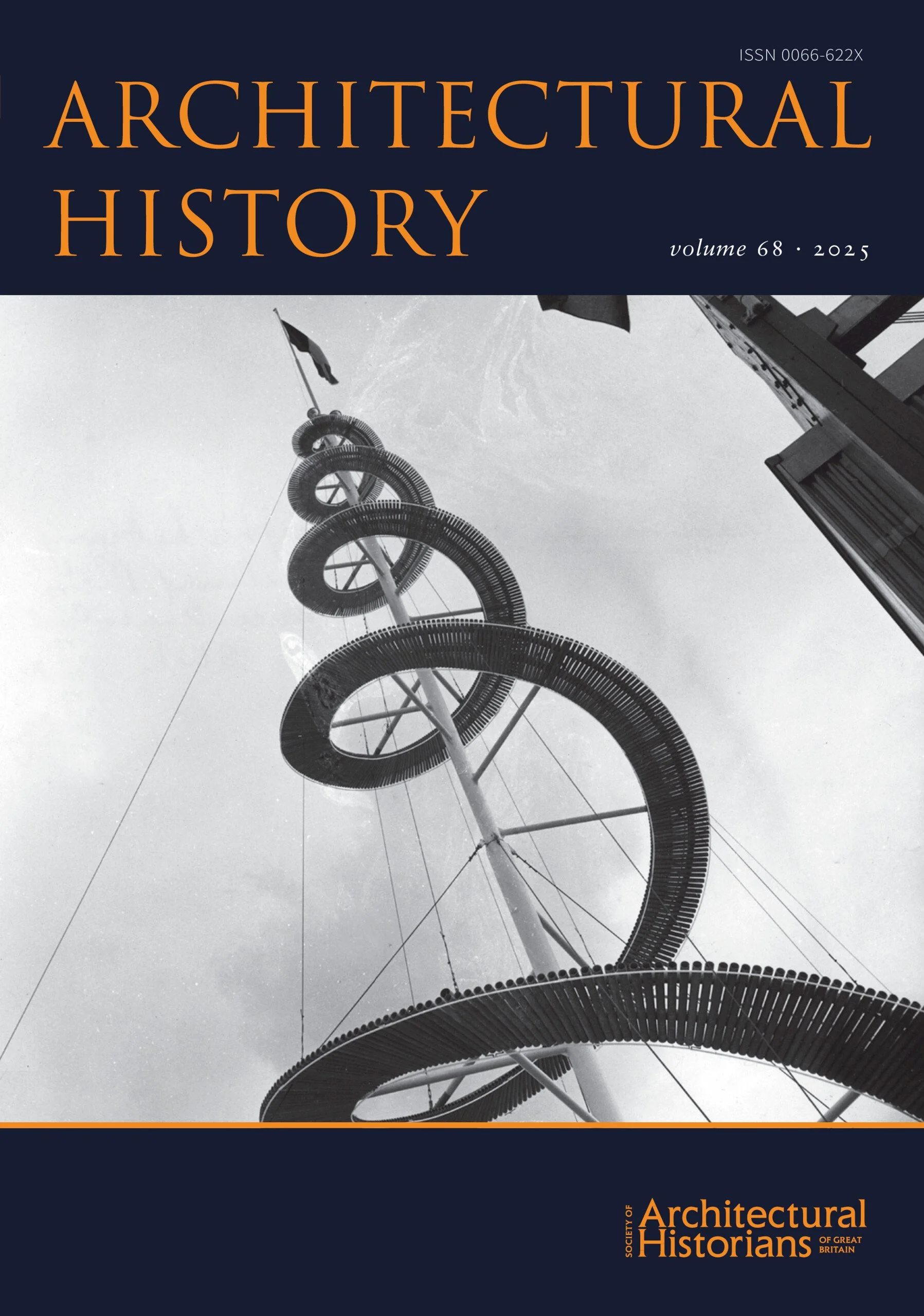
Remembering the Colonial Soldier: The Indian Undertaking of the Imperial War Graves Commission, 1917–27
Available Online via Cambridge University Press
Those seeking to contribute to Architectural History can find further details via the journal’s website.